A mattress is the single most awkward thing most households ever have to get rid of. It's too big for a car, too bulky for the curb, and it's the one item almost every disposal route either refuses outright or charges extra for.
If you've just discovered that nobody will take yours, you're not doing anything wrong. The rules genuinely are stacked against this one object. Here's why, and what actually works.
Why Charities Say No
Start with the route most people try first, because it feels like the responsible one.
Almost no charity accepts used mattresses, and it isn't snobbery about condition. It's bed bugs. An infestation moving through a donation warehouse can contaminate an entire inventory, and the cost of dealing with that dwarfs the value of any mattress. Most organizations also can't legally resell used bedding without sanitization certification, which varies by state and which few thrift operations hold.
Some will take a mattress that's still in its original wrapping, or a frame without the mattress. Assume no otherwise, and call ahead rather than turning up with it in a truck.
Why Dumpsters Surcharge Them
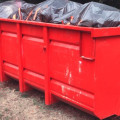
The second instinct is a roll-off. That mostly works, but expect a line item.
Mattresses are what the waste industry calls a problem load. They don't compact — the springs resist compression and then spring back, so one mattress takes up a wildly disproportionate share of a container by volume. Worse, they tangle in the machinery at transfer stations and landfills, wrapping around compactor shafts and shutting lines down.
Plenty of landfills ban them outright for that reason. The ones that accept them generally charge a per-unit fee, and your dumpster company passes it on — typically as a surcharge on top of the rental, sometimes per mattress and per box spring separately.
None of which is a reason not to use a dumpster if you're already renting one. Just ask what the mattress fee is when you book, rather than finding it on the invoice.
Why Curbside Usually Won't Either
Municipal bulky item collection is the cheapest option where it exists — often free, by appointment.
The catch is who qualifies. Bulk pickup is typically a service of an incorporated city or town, which means anyone in an unincorporated area outside the limits isn't eligible, even with a city mailing address. That catches a lot of people in suburban and coastal counties, where the subdivisions outside the city boundary look identical to the ones inside it.
Where it does exist, expect limits: a set number of items per year, advance scheduling, and specific placement rules. Some areas also require mattresses to be bagged in plastic before collection, which is a bed bug containment measure rather than bureaucracy.
Check your own municipality's page before assuming either way. It takes two minutes and it's the difference between free and $100.
Recycling Is Better Than It Sounds
Here's the part that surprises people: a mattress is one of the more recyclable things in a house.
According to the Mattress Recycling Council, up to 75 percent of a mattress can be recovered. The steel springs go to scrap. Foam — polyurethane, memory and latex — gets shredded and blended into carpet padding. Wooden frames become mulch, biomass fuel or shipping pallets. Even the polypropylene from pocketed coil sleeves has a market.
What's left over is mostly quilt panel fabric, fibers and shoddy felt, which still has limited end markets and generally does get landfilled. But three quarters recovered is a far better outcome than burial, and it's the reason mattresses are worth separating out rather than burying in a mixed load.
Four states — California, Connecticut, Oregon and Rhode Island — run dedicated mattress recycling programs funded by a fee collected at point of sale, which means drop-off is free to residents. If you're in one of those, use it; you've already paid for it.
Everywhere else it's patchier. Some counties run periodic collection events, some transfer stations accept mattresses separately for a fee, and some recyclers take them directly. Worth ten minutes of searching before defaulting to landfill.
What Actually Works
Running through the realistic options, roughly cheapest first:
- Municipal bulky pickup, if you're inside city limits and can wait for a slot. Usually free.
- A state recycling program, if you're in one of the four that have them. Also free.
- Drop it yourself at a transfer station or recycler that accepts mattresses. Cheap, if you have a vehicle that fits one and someone to help you load it.
- Retailer haul-away when the new mattress is delivered. Often the easiest route and sometimes free — but ask at the point of order, because it usually can't be added later.
- Add it to a dumpster you're already renting, accepting the surcharge.
- Single-item pickup from a junk removal company.
That last one is worth understanding properly, because people assume it's the expensive option and it frequently isn't.
The Single-Item Route
Most junk removal pricing is built around volume — you book a fraction of a truck or trailer, and the price scales with the space you fill. That model makes small jobs look bad value on paper.
But most operators also run a single-item rate specifically for things like this, typically starting somewhere around $99 depending on the market. For one mattress, that's often less than a dumpster surcharge plus the rental, and considerably less than renting a van, finding a second pair of hands and spending a Saturday on it.
It also solves the problem that stops most people: the carrying. A king mattress down two flights of stairs is a genuinely difficult object, and box springs in particular don't make the turns that mattresses flex through.
The thing worth asking, if where it ends up matters to you, is whether the company sorts its loads or just tips them. Plenty don't. The ones that do will route the mattress to a recycler rather than the landfill — companies that handle single-item pickups and sorted loads around Wilmington, North Carolina are a reasonable example of how that model works, and most regions have equivalents. It's a fair question to ask before booking anywhere.
Two Things to Do Before You Book Anything
Check whether it's a mattress or a mattress and a box spring. They're charged separately almost everywhere — curbside limits, dumpster surcharges and single-item rates all tend to count them as two items. People routinely book for one and get billed for two.
Bag it if you can. Mattress disposal bags cost a few dollars, they're required by some collection programs, and they stop a damp mattress contaminating everything it touches in transit. If there's any bed bug history at all, this isn't optional — say so when you book, because it changes how it gets handled.
None of this makes mattress disposal interesting. But it's the kind of thing that costs $40 or $200 depending entirely on which option you check first.